
Personalized Cardiovascular Prevention | Physician-Guided Lifestyle Medicine
No Membership Required

Adults 18+
Dr. Carl Covey
MD, CAQSP, FAAFP, DipABLM
Heart Health Optimization Program in Rochester, NY
Understand Your Risk. Protect Your Heart. Invest in a Healthier Future.
At Rochester HealthSpan Medicine, we believe cardiovascular prevention should begin long before heart disease becomes symptomatic. Our Heart Health Optimization Program focuses on understanding your individual cardiovascular risk factors, identifying opportunities for prevention, and developing a personalized strategy to support heart health throughout life.
Through physician-guided risk assessment, evidence-based Lifestyle Medicine, and appropriate diagnostic testing, we help you move beyond isolated cholesterol or blood pressure numbers toward a clearer understanding of your cardiovascular health.
What Is Heart Health Optimization?
Heart Health Optimization is a proactive, physician-guided approach to evaluating cardiovascular risk and identifying opportunities to improve long-term heart and vascular health.
Cardiovascular disease often develops gradually. Elevated cholesterol, high blood pressure, abnormal blood sugar, and other risk factors may be present for years without noticeable symptoms. Understanding these factors allows for earlier preventive action.
Unlike an isolated cholesterol test or a single blood pressure reading, a comprehensive cardiovascular risk assessment considers how multiple factors interact to influence your future risk of heart attack, stroke, and other cardiovascular conditions.
At Rochester HealthSpan Medicine, our approach combines clinical evaluation, appropriate laboratory testing, individualized risk estimation, and Lifestyle Medicine to guide preventive decisions.
The goal is not simply to collect more health data. It is to understand which findings matter, determine what can be improved, and develop a practical plan based on your personal health history and goals.
What Does Heart Health Optimization Evaluate?
Cholesterol and Lipid Health
A standard lipid panel measures LDL cholesterol, HDL cholesterol, total cholesterol, and triglycerides. These measurements provide important information about cardiovascular risk and help guide decisions about lifestyle changes and medication when appropriate.
Advanced Cardiovascular Biomarkers
Selected individuals may benefit from additional testing, including lipoprotein(a), or Lp(a), and apolipoprotein B (ApoB). Lp(a) is largely genetically determined and can identify inherited cardiovascular risk. ApoB may provide additional information about atherogenic lipoprotein particles, particularly in certain metabolic conditions.
These tests are considered according to individual medical history and clinical indications.
Blood Pressure and Vascular Risk
Blood pressure assessment helps identify hypertension, a major contributor to heart disease, stroke, kidney disease, and other complications. When appropriate, home blood pressure readings can provide useful information beyond a single office measurement.
Blood Sugar and Metabolic Health
Glucose and hemoglobin A1c testing, when indicated, can help identify diabetes, prediabetes, or impaired blood sugar regulation. Weight, waist circumference, kidney function, and other metabolic factors may also contribute to cardiovascular risk.
Estimated Cardiovascular Risk
Validated clinical tools, including the American Heart Association's PREVENT equations for eligible adults, can estimate cardiovascular risk using factors such as age, cholesterol, blood pressure, diabetes, kidney function, and smoking status.
Results help guide individualized discussions about prevention and treatment.
Lifestyle and Behavioral Risk Factors
Nutrition, physical activity, sleep, stress, tobacco exposure, and other daily behaviors influence cardiovascular health. Understanding these patterns helps your physician identify realistic opportunities for meaningful improvement.
Long-Term Heart Health Monitoring
Follow-up assessments may help evaluate changes in cholesterol, blood pressure, blood sugar, and other relevant markers over time. Monitoring intervals depend on individual risk factors, treatment decisions, and clinical needs.
Heart Health and Midlife: Why Early Prevention Matters
Your Health Changes. Your Cardiovascular Risk Changes Too.
Cardiovascular risk evolves throughout adulthood. Blood pressure, cholesterol, blood sugar, body composition, hormonal changes, and lifestyle habits can all influence cardiovascular health over time.
For some individuals, elevated cardiovascular risk begins developing decades before a heart attack or stroke. Identifying and managing risk factors earlier may help reduce cumulative exposure to conditions that contribute to cardiovascular disease.
Midlife is an especially important time to reassess cardiovascular health.
For women, the menopause transition may be accompanied by changes in cholesterol levels, body fat distribution, blood pressure, and metabolic health. These changes deserve attention as part of an individualized cardiovascular assessment.
Men also experience age-related changes in cardiovascular risk, particularly when hypertension, elevated cholesterol, diabetes, excess abdominal weight, or family history are present.
Cardiovascular disease is not always preceded by obvious warning signs. High blood pressure and elevated cholesterol frequently cause no noticeable symptoms.
You do not need to wait for symptoms to begin paying attention to your heart health.
At Rochester HealthSpan Medicine, we encourage conversations about cardiovascular prevention throughout adulthood, particularly when personal history, family history, or changes in health suggest increased risk.
Preventive assessment and testing should be selected according to individual circumstances. Some individuals benefit from earlier or more detailed evaluation, while others may need only routine screening and established preventive care.

Dr. Laura Petrescu MD, CPE, MSCP, DipABLM
Internal Medicine | Lifestyle Medicine | Menopause Medicine | Certified Physician Executive
Why Choose Heart Health Optimization?
A More Personalized Approach to Cardiovascular Prevention
Comprehensive Risk Assessment
Looks beyond a single test result to consider cholesterol, blood pressure, metabolic health, family history, lifestyle, and other relevant cardiovascular risk factors.
Advanced Testing When Appropriate
Allows your physician to consider selected biomarkers or additional diagnostic studies when they may meaningfully improve cardiovascular risk assessment or guide treatment decisions.
Earlier Risk Awareness
Helps identify cardiovascular risk factors that may be present without symptoms, supporting timely preventive discussions and intervention.
Evidence-Based Lifestyle Medicine
Addresses nutrition, physical activity, sleep, tobacco exposure, weight management, and other modifiable factors that contribute to long-term cardiovascular health.
Personalized Prevention
Translates clinical findings into an individualized plan that may include lifestyle recommendations, monitoring, medication discussions, or referrals when appropriate.
Accessible Without Membership
The Heart Health Optimization Program is offered through HealthSpan Services, allowing patients to seek focused preventive care without enrolling in a Direct Primary Care Membership.
A personalized cardiovascular prevention strategy should reflect your medical history, current risk factors, and individual needs. Additional testing is not necessary for every patient, and more testing does not automatically mean better prevention.

“Your heart supports every part of your life, yet many of the factors that affect cardiovascular health develop quietly over time. Heart health is about more than a cholesterol number or a blood pressure reading. It is about understanding your individual risks, recognizing what you can change, and making informed decisions that support your health for years to come. At Rochester HealthSpan Medicine, we believe prevention should be personal, practical, and grounded in reliable science.”
Dr. Laura Petrescu MD, CPE, MSCP, DipABLM
Internal Medicine | Lifestyle Medicine | Menopause Medicine | Certified Physician Executive
No Membership Required | Personalized Physician-Guided Care | Evidence-Based Prevention
Who Should Consider a Heart Health Optimization Program?
You may benefit from a personalized cardiovascular health evaluation if you:
Have elevated cholesterol, triglycerides, or blood pressure.
Have a family history of premature heart disease, heart attack, or stroke.
Have been diagnosed with prediabetes, diabetes, or metabolic syndrome.
Have an elevated lipoprotein(a) level or a family history suggesting inherited lipid disorders.
Are experiencing changes in cardiovascular or metabolic risk during midlife or menopause.
Have excess abdominal weight or other metabolic risk factors.
Have a history of smoking or current tobacco use.
Have chronic kidney disease or other medical conditions associated with increased cardiovascular risk.
Want to understand whether additional cardiovascular testing may be appropriate.
Are concerned about several mildly abnormal health measurements and want to understand their combined significance.
Want a structured, physician-guided approach to improving nutrition, physical activity, sleep, and other cardiovascular health behaviors.
Have previously been advised to improve cholesterol, blood pressure, or metabolic health and want help developing an individualized plan.
Your cardiovascular health assessment should be guided by your personal and family medical history, existing conditions, and clinical risk factors, not simply your age.
People with established cardiovascular disease may require a different assessment and treatment approach, including coordinated care with a cardiologist.
Heart Health Optimization vs. a Standard Heart Health Checkup
| Feature | Heart Health Optimization Approach | Typical Basic Heart Health Screening |
|---|---|---|
| Primary focus | Comprehensive cardiovascular risk assessment and individualized prevention | Identification of common cardiovascular risk factors |
| Cholesterol assessment | Lipid results interpreted within broader cardiovascular risk | Standard lipid panel when indicated |
| Blood pressure assessment | Evaluation of blood pressure patterns and related risk factors | Office blood pressure measurement |
| Advanced lipid biomarkers | Lp(a) and ApoB considered when clinically appropriate | Not routinely included in a basic lipid panel |
| Metabolic health | Consideration of glucose, HbA1c, kidney function, and related factors | Testing determined by routine screening needs |
| Family history | Detailed consideration of inherited and premature cardiovascular disease risk | Family history typically reviewed as part of routine care |
| Cardiovascular risk estimation | Individualized risk calculation when applicable | May be performed depending on age and clinical indications |
| Lifestyle assessment | Personalized focus on nutrition, movement, sleep, weight, and tobacco exposure | Preventive lifestyle counseling |
| Prevention planning | Individualized strategies based on overall risk and health goals | Recommendations guided by screening findings |
| Follow-up monitoring | Reassessment based on identified risks and treatment goals | Routine monitoring according to clinical needs |
Important: A comprehensive primary care visit can include many of the same assessments. Heart Health Optimization is intended to provide a focused cardiovascular prevention approach, not to replace routine medical care or imply that additional testing is necessary for everyone.
What to Expect During Your Heart Health Optimization Appointment
Step 1: Your Cardiovascular Health Assessment
Step 2: Understanding Your Results and Cardiovascular Risk
Step 3: Your Personalized Heart Health Plan
At Rochester HealthSpan Medicine, our approach emphasizes informed decisions, practical lifestyle changes, and ongoing attention to factors that support long-term cardiovascular health.
Understanding the Limitations of Cardiovascular Risk Assessment
Cardiovascular risk assessment is an important part of preventive medicine, but no single laboratory test, imaging study, or risk calculator can fully predict an individual's cardiovascular future.
Results should be interpreted in the context of your medical history, symptoms, medications, family history, examination findings, and other relevant clinical information.
Risk calculators estimate probabilities using population-based data. They cannot determine with certainty whether an individual will or will not experience a heart attack or stroke.
Important considerations include:
Normal cholesterol results do not eliminate cardiovascular risk.
Elevated biomarkers do not necessarily mean that cardiovascular disease is already present.
Advanced testing such as ApoB, coronary artery calcium scoring, or additional cardiovascular imaging is not required for every patient.
Coronary artery calcium scoring uses low-dose CT radiation and should be considered only when clinically appropriate.
Lifestyle changes are essential, but medication may also be necessary to reduce risk in some patients.
Cardiovascular risk estimates should be reassessed when health conditions or risk factors change.
Some findings require specialist evaluation rather than management through a preventive optimization program alone.
No prevention program can guarantee that a cardiovascular event will not occur.
The Heart Health Optimization Program is intended for preventive evaluation and risk management. It does not replace emergency assessment of chest pain, severe shortness of breath, sudden weakness, or other symptoms suggesting an acute cardiovascular event.
Our goal is to support informed, individualized decisions through reliable science, clinical judgment, and practical prevention.

Heart Health Optimization Program Pricing
Invest in Your Heart Health and a Healthier Future
Physician-Guided Heart Health Optimization Program
Available to members and non-members of Rochester HealthSpan Medicine.
Program fees and included services will be confirmed when scheduling. Depending on individual clinical needs, additional laboratory testing, cardiovascular imaging, medications, or specialist consultations may involve separate fees.
No Membership Required
Individualized Cardiovascular Prevention
Physician-Guided Care
JOIN Our Heart Health Optimization Program
Go Beyond Cholesterol Numbers. Build a Personalized Cardiovascular Health Strategy.
At Rochester HealthSpan Medicine, we believe understanding cardiovascular risk is only the beginning.
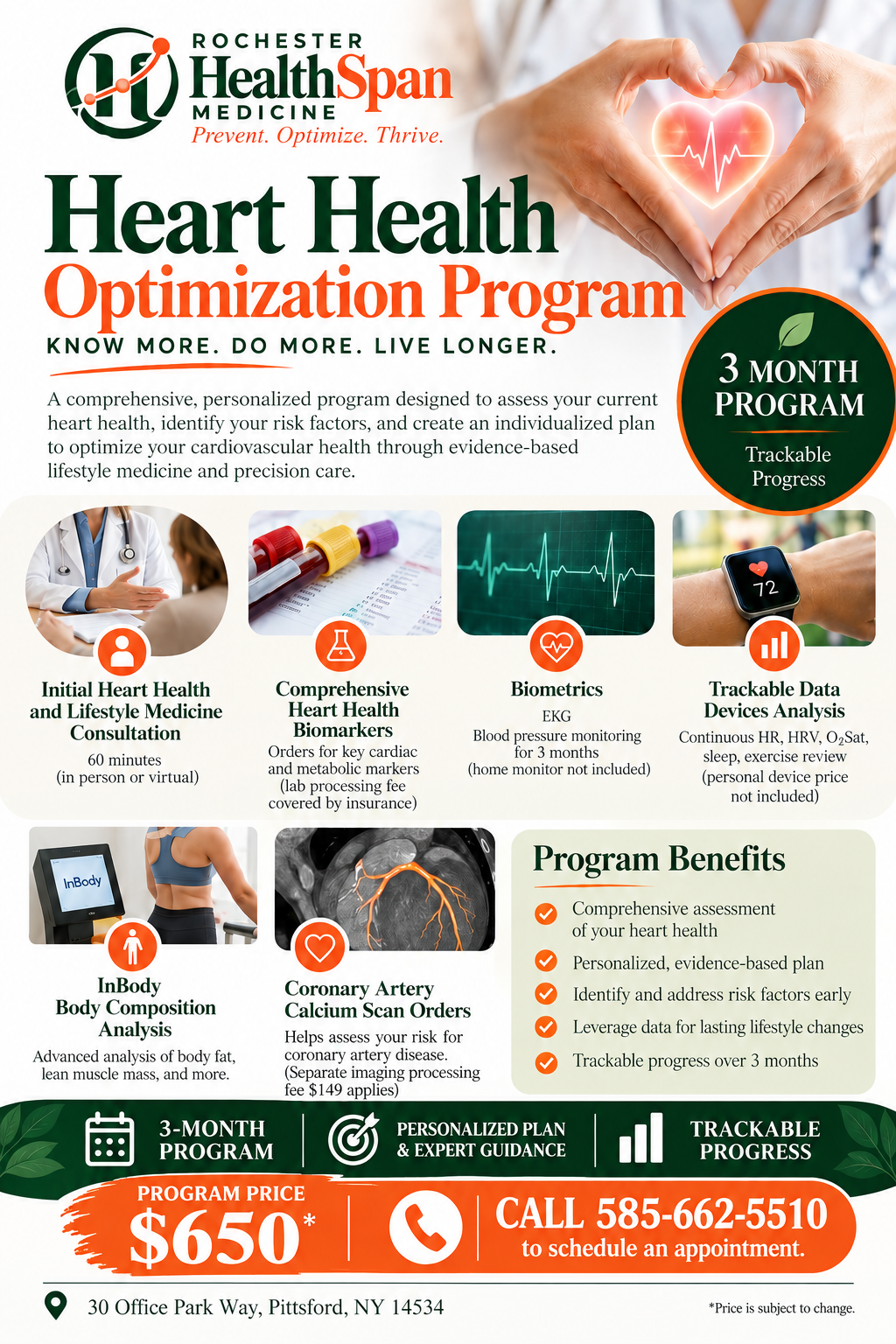
For individuals seeking a more comprehensive approach to heart health, our physician-guided Heart Health Optimization Program brings together personalized clinical evaluation, appropriate diagnostic testing, and evidence-based Lifestyle Medicine.
The program's clinical approach may include:
Comprehensive Physician Consultation
A detailed review of cardiovascular concerns, medical and family history, medications, existing health conditions, and relevant preventive needs.
Cardiovascular Risk Factor Assessment
Evaluation of cholesterol, blood pressure, metabolic health, and other factors contributing to cardiovascular disease risk.
Review of Relevant Laboratory Biomarkers
Interpretation of standard lipid testing, blood glucose measurements, and additional biomarkers such as Lp(a) or ApoB when appropriate.
Personalized Nutrition and Physical Activity Recommendations
Practical strategies based on cardiovascular health goals, current habits, medical history, and individual physical capabilities.

Dr. Laura Petrescu MD, CPE, MSCP, DipABLM
Internal Medicine | Lifestyle Medicine | Menopause Medicine | Certified Physician Executive
Individualized Cardiovascular Prevention Plan
Recommendations that may address blood pressure control, lipid management, metabolic health, weight, tobacco cessation, sleep, and other modifiable risk factors.
Follow-Up and Progress Evaluation
Clinically appropriate reassessment of selected cardiovascular measurements, lifestyle changes, and treatment goals to determine whether the prevention plan should be adjusted.
Our approach combines evidence-based medical assessment with Lifestyle Medicine to support cardiovascular health, physical function, and long-term well-being.
The exact number of consultations, duration, included laboratory tests, follow-up visits, and program investment should be confirmed with Rochester HealthSpan Medicine before enrollment.
Most Frequently Asked Questions
-
A Heart Health Optimization Program is a physician-guided preventive service focused on understanding cardiovascular risk factors and developing individualized strategies for heart health. It considers clinical findings, medical history, family history, lifestyle habits, and appropriate diagnostic testing.
-
Adults with elevated cholesterol, hypertension, diabetes, family history of premature cardiovascular disease, or other relevant risk factors may benefit from an individualized assessment. Preventive cardiovascular screening is also an important part of routine adult medical care.
-
Yes. Conditions such as high blood pressure, elevated cholesterol, and atherosclerosis can develop without noticeable symptoms. Preventive assessment helps identify risk factors before complications occur, although no screening approach can identify every cardiovascular condition.
-
A standard lipid panel measures cholesterol fractions and triglycerides. Additional tests such as Lp(a) or ApoB may help clarify cardiovascular risk in selected situations. These tests serve different purposes and should be ordered and interpreted according to clinical guidelines.
-
Lipoprotein(a), or Lp(a), is a cholesterol-carrying particle influenced primarily by genetics. Elevated levels are associated with increased atherosclerotic cardiovascular risk. Current guidelines recommend measuring Lp(a) at least once in adulthood to help inform cardiovascular risk assessment.
-
Yes. A heart-healthy dietary pattern, regular physical activity, tobacco avoidance, adequate sleep, and management of weight, blood pressure, cholesterol, and blood sugar can support cardiovascular health. Some individuals also benefit from medication, depending on their risk and medical conditions.
-
Coronary artery calcium scoring may be considered for selected adults when the result would help clarify cardiovascular risk or guide treatment decisions. It is not necessary for everyone. Whether the test is available through the program, and any associated fees, should be confirmed with the practice.
-
The program can provide a focused assessment of these conditions and help guide an individualized prevention or management strategy. Appropriate treatment may include lifestyle changes, medication, monitoring, and additional medical evaluation.
-
No. The program is designed around cardiovascular prevention and can be appropriate for people who want to better understand their risk factors. Individuals with established cardiovascular disease may need additional specialist-directed care.
-
No. The program focuses on preventive assessment and cardiovascular risk management. Patients with suspected or established heart disease, concerning symptoms, or complex cardiovascular conditions may require evaluation by a cardiologist.
-
The appropriate interval depends on age, medical history, existing conditions, medications, and previous results. Patients beginning or changing treatment may require closer monitoring, while others may need less frequent reassessment.
-
No. The Heart Health Optimization Program is offered as a HealthSpan Service, with no Direct Primary Care Membership required.
A Stronger Heart. A Healthier Life. A More Informed Future.
Discover What Your Cardiovascular Health Can Tell You About Your Future.
Your heart health deserves more than attention to individual numbers.
At Rochester HealthSpan Medicine, we combine personalized physician care, appropriate diagnostic testing, and evidence-based Lifestyle Medicine to help you understand cardiovascular risk and take meaningful steps toward better long-term health.
Whether you are concerned about elevated cholesterol, have a family history of heart disease, or want to develop a proactive cardiovascular prevention plan, our Heart Health Optimization Program offers a thoughtful starting point.
Call 585-662-5510 to Discuss Your Heart Health Optimization Appointment.