
HealthSpan Services · Rochester, NY
No Membership Required · Adults 18+Echolight REMS Bone Density Scan
A Smarter, Radiation-Free Way to Understand Your Bone Health
At Rochester HealthSpan Medicine, we believe bone health deserves a proactive, personalized approach.
Your bones are the foundation of your strength, mobility, and independence. Yet bone loss often develops silently, without symptoms, until a fracture occurs.
We are proud to bring to New York Echolight REMS (Radiofrequency Echographic Multi-Spectrometry), an innovative, radiation-free technology that evaluates bone mineral density and provides additional insights into bone strength and fracture risk.
Whether you are approaching menopause, concerned about osteoporosis, or simply want to establish a baseline for your future health, Echolight REMS offers a convenient, noninvasive way to better understand your bones.
No Doctor Referral Necessary | No Insurance Necessary | Immediate Scheduling Available
What Is Echolight REMS?
REMS (Radiofrequency Echographic Multi Spectrometry) is an FDA-cleared technology that uses ultrasound rather than X-rays to assess bone mineral density at the lumbar spine and femoral neck, two important areas used in evaluating osteoporosis and fracture risk.
Unlike conventional DXA (DEXA) bone density scans, which use low-dose X-rays, Echolight REMS uses no ionizing radiation.
The technology analyzes ultrasound signals reflected from bone structures using specialized algorithms, providing clinically meaningful information about skeletal health.
What Does Echolight REMS Measure?
Bone Mineral Density (BMD)
An estimate of bone mineral density that helps identify low bone mass, osteopenia and osteoporosis.
T-Score and Z-Score
Standardized measurements that compare your bone density with reference populations, helping your physician interpret skeletal health.
Fragility Score
Unlike DEXA scan, Echolight provides a REMS-derived indicator that evaluates ultrasound characteristics associated with bone fragility, providing information beyond bone density alone.
Estimated Fracture Risk
REMS results may help inform fracture risk assessment when interpreted alongside age, medical history, prior fractures, medications, and other clinical risk factors.
Bone Health Monitoring
Serial assessments may help your physician evaluate changes in bone health over time, using consistent measurement methods and appropriate follow-up intervals.
Why Choose Echolight REMS?
The Benefits of Radiation-Free Bone Health Assessment
100% Radiation-Free Technology
Uses ultrasound rather than ionizing radiation.
Noninvasive and Comfortable
No injections, contrast agents, or needles.
Comprehensive Insights
Evaluates bone density and additional ultrasound-derived indicators of bone fragility.
Early Awareness
Helps identify low bone density before a fracture occurs.
Personalized Prevention
Provides information to guide conversations about nutrition, exercise, hormonal changes, and osteoporosis prevention.
Accessible
No physician referral or insurance coverage is required to schedule a self-pay assessment.
Echolight REMS is an additional option for evaluating bone health. Conventional DXA remains an established standard for osteoporosis diagnosis and monitoring, and your physician may recommend DXA or other testing depending on your circumstances.
Bone Health and Menopause: Why Early Assessment Matters
Your Hormones Change. Your Bones Change Too.
Estrogen plays an essential role in maintaining bone strength. During the menopause transition, declining estrogen levels can accelerate bone loss, increasing the risk of osteopenia, osteoporosis, and fractures later in life.
Bone loss can be particularly rapid during the first several years surrounding the final menstrual period.
Unfortunately, osteoporosis is often called a silent disease because it usually causes no symptoms until a fracture occurs.
You do not need to wait for a fracture to start paying attention to your bone health.
At Rochester HealthSpan Medicine, we encourage conversations about bone health beginning in early midlife, particularly for women experiencing perimenopause, early menopause, or additional osteoporosis risk factors.
For selected individuals, establishing an earlier bone health baseline may be appropriate. Routine screening recommendations, however, depend on age and individual risk factors; screening is generally recommended for women 65 and older and younger postmenopausal women at increased risk.
Who Should Consider an Echolight REMS Bone Health Assessment?
You may benefit from a bone health evaluation if you:
- Are perimenopausal or postmenopausal
- Have osteoporosis risk factors
- Are experiencing early menopause or premature ovarian insufficiency.
- Have a family history of osteoporosis or hip fractures.
- Have experienced a fracture after a minor fall or low-impact injury.
- Have a low body weight or history of significant weight loss.
- Have used medications associated with bone loss, such as glucocorticoids.
- Have medical conditions associated with reduced bone density.
- Have concerns about bone health or wish to discuss individualized preventive assessment.
- Have previously been diagnosed with osteopenia or osteoporosis and need to discuss appropriate follow-up testing.
Your bone health assessment should be guided by your individual medical history, not simply your age.
Echolight REMS vs. Traditional DXA (DEXA) Bone Density Scan
| Feature | Echolight REMS | Traditional DXA |
|---|---|---|
| Technology | Ultrasound-based radiofrequency analysis | Low-dose X-ray |
| Ionizing radiation | None | Yes, low dose |
| Bone mineral density assessment | Yes | Yes |
| T-Score and Z-Score | Yes | Yes |
| Additional bone fragility indicator | REMS Fragility Score | Not routinely included in standard DXA |
| Scan experience | Noninvasive | Noninvasive |
| Fracture risk evaluation | Contributes information to clinical risk assessment | Established role in fracture risk assessment |
| Long-term evidence and guideline adoption | Growing | Extensive |
Important: REMS and DXA measurements are not interchangeable in every clinical situation. REMS-derived results should be interpreted using validated methods, and DXA may still be necessary for diagnostic confirmation, treatment decisions, or monitoring.
What to Expect During Your Echolight REMS Appointment
Step 1: Your Bone Health Assessment
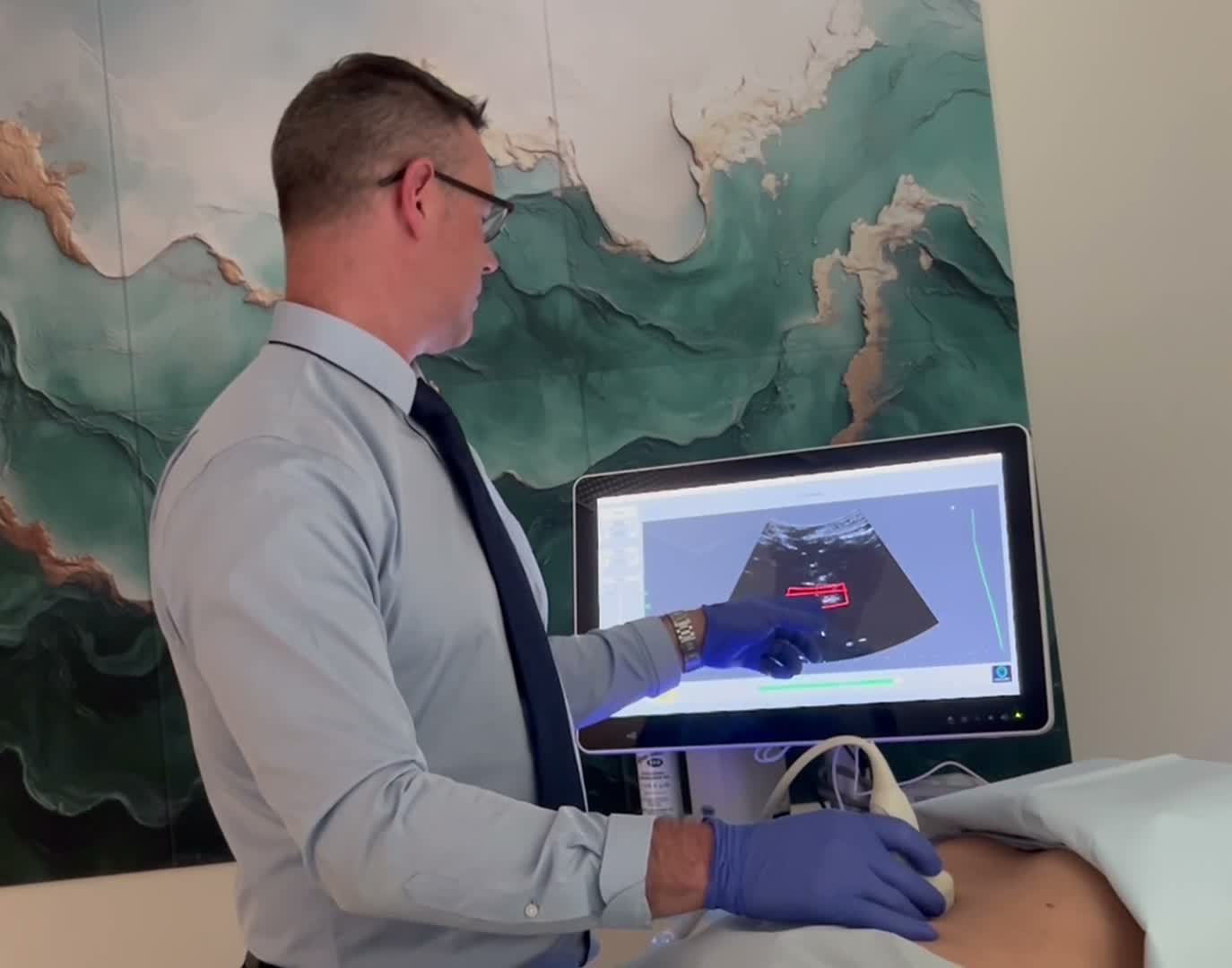
You will be positioned comfortably while a trained professional uses an ultrasound probe to obtain measurements of your lumbar spine and hip.
The scan is noninvasive, radiation-free, and typically completed within approximately 10–20 minutes.
Step 2: Your Results
Your assessment generates a report that may include:
- Bone Mineral Density
- T-Score
- Z-Score
- REMS Fragility Score
- Additional bone health indicators, as available
Step 3: Your Next Steps
Your results can help guide decisions about further evaluation, lifestyle modifications, and whether a more comprehensive bone health consultation is appropriate.
At Rochester HealthSpan Medicine, we emphasize evidence-based prevention and individualized care, including attention to resistance exercise, nutrition, adequate calcium and vitamin D intake, fall prevention, and appropriate medical treatment when indicated.
Echolight REMS Bone Density Scan: What to Expect. Watch this short scan demonstration. Your physician will explain preparation, positioning, and the results at your appointment.
Understanding the Limitations of Echolight REMS
As with any diagnostic test, REMS has limitations. Results can be affected by technical factors, patient anatomy, positioning, or scan quality. REMS results should therefore be interpreted together with your medical history, fracture history, medications, laboratory findings, and other risk factors.
REMS is also a newer technology than traditional DXA (DEXA), which remains the most established and widely used bone-density test in the United States.
Although Echolight REMS offers meaningful advantages, it is important to understand that no single scan provides a complete picture of skeletal health.
Important considerations include:
- REMS results require interpretation in the context of your medical history and individual risk factors.
- REMS is not a substitute for evaluation of suspected fractures or other bone disorders.
- Conventional DXA, laboratory testing, or specialist evaluation may still be recommended.
- The REMS Fragility Score is an additional measure and should not be considered a standalone prediction of fracture risk.
- Treatment monitoring should follow clinically appropriate intervals and validated protocols.
Our goal is to help patients make informed decisions based on reliable science, individualized risk assessment, and long-term health goals.
Echolight REMS Pricing
Invest in Stronger Bones and a Healthier Future
Introductory Bone Density Scan (stand alone service)
Available to members and non-members of Rochester HealthSpan Medicine.
Your assessment includes ultrasound-based bone density measurements and a generated REMS report.
A separate comprehensive physician consultation or Bone Health Optimization Program may be recommended depending on your results and individual needs.
Pricing is subject to change. Please confirm current pricing when scheduling.
No Doctor Referral Necessary
No Insurance Necessary
Immediate Scheduling Available
Take the Next Step: Our Bone Health Optimization Program
Go Beyond Bone Density. Build a Personalized Bone Health Strategy.
At Rochester HealthSpan Medicine, we believe measuring bone health is only the beginning.
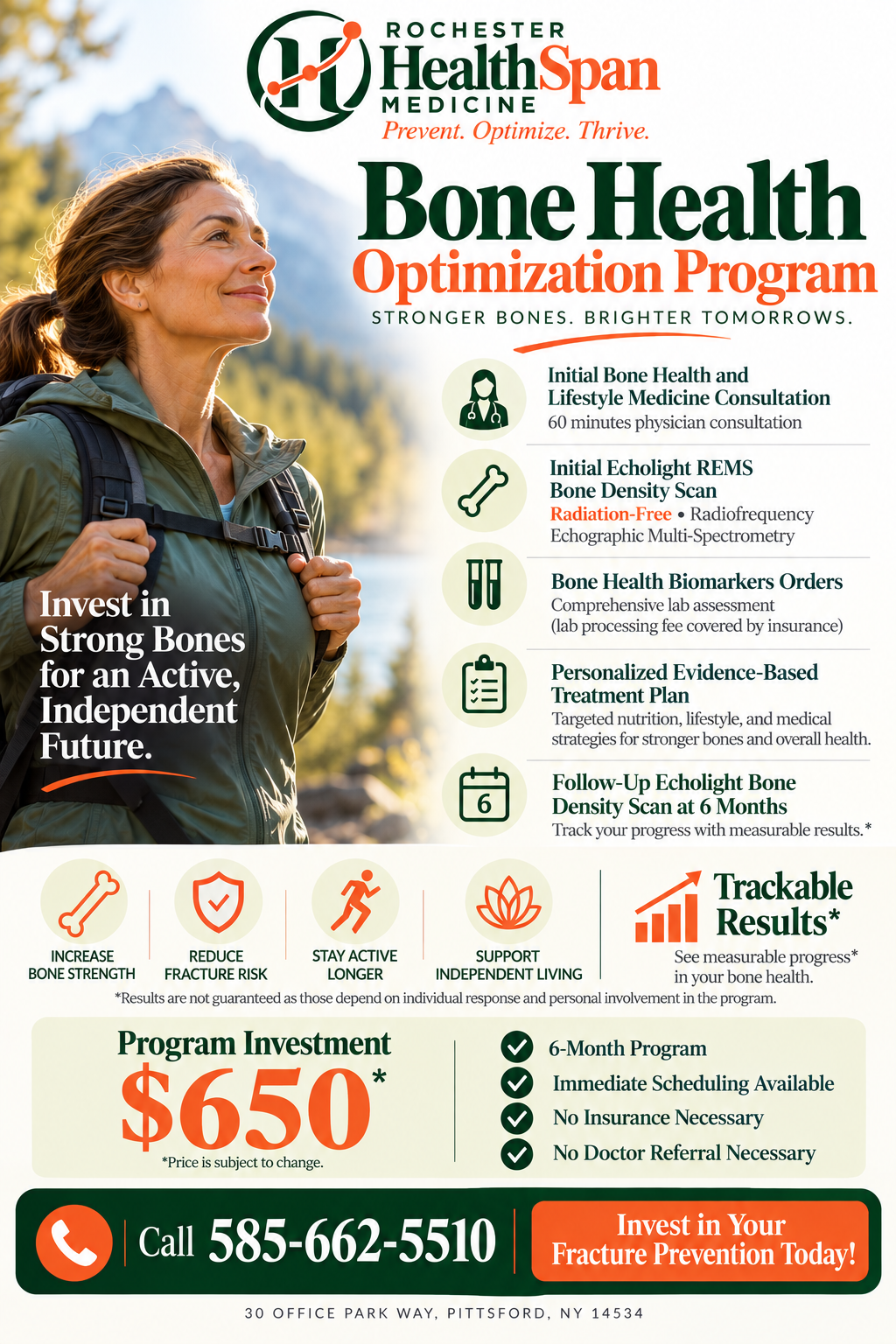
For individuals seeking a more comprehensive approach, we offer a physician-guided 6-Month Bone Health Optimization Program.
Program Investment: $650
The program includes:
- Comprehensive 60-minute physician consultation.
- Review of personal and family history and osteoporosis risk factors.
- Initial Echolight REMS bone health assessment.
- Evaluation of relevant laboratory biomarkers.
- Personalized nutrition, physical activity, and bone health recommendations.
- Individualized prevention or management plan.
- Follow-up REMS assessment at six months when clinically appropriate.
Our approach combines advanced technology with evidence-based Lifestyle Medicine to support long-term skeletal health, mobility, and independence.
Additional diagnostic testing or treatments, when indicated, may involve separate fees.
Most Frequently Asked Questions
Is Echolight REMS safe?
Echolight REMS uses ultrasound and does not expose patients to ionizing radiation. It is noninvasive and generally well tolerated.
Is the procedure painful?
No. The assessment involves placing an ultrasound probe against the skin, usually with ultrasound gel.
How long does the scan take?
Most assessments take approximately 10–20 minutes, although total appointment time may vary.
Can Echolight REMS detect osteoporosis?
REMS technology can estimate bone mineral density and generate diagnostic classifications. Your physician should interpret the results alongside clinical risk factors and determine whether additional testing is necessary.
Is Echolight REMS better than DXA?
Each technology has advantages and limitations. REMS avoids ionizing radiation and provides additional ultrasound-derived bone information. DXA remains the most established and widely recommended method for osteoporosis assessment and treatment monitoring.
How often should I repeat the assessment?
The appropriate interval depends on your age, risk factors, initial results, and whether you are receiving osteoporosis treatment. We typically recommend a yearly monitoring protocol. 6 month follow up maybe necessary if you are actively working on a bone health improvement program. More frequent testing is not always medically necessary.
Do I need a physician referral?
No. You can schedule an Echolight REMS assessment directly with Rochester HealthSpan Medicine.
Do I need health insurance?
No. We offer transparent self-pay pricing.
Can men benefit from bone density screening?
Yes. Men can develop osteoporosis, particularly with advancing age, hormonal changes, certain medical conditions, or medications that affect bone health. Screening should be individualized.
Strong Bones. Active Life. Healthier Future.
Discover What Your Bones Can Tell You About Your Health.
At Rochester HealthSpan Medicine, we combine advanced diagnostic technology, clinical expertise, and evidence-based Lifestyle Medicine to help you take a proactive approach to your health.
Rochester HealthSpan Medicine
30 Office Park Way, Pittsford, NY 14534
HealthSpan Services (No Membership Required)
Prevent. Optimize. Thrive.